Work / Bevica Fonden
One accessible,AI-assisted home foruniversal design
Three legacy websites merged into one accessible knowledge portal, with a custom AI assistant trained on the foundation's universal design resources.
- My role
- Client management, Art direction
- Delivered with
- Delivered with the Kvalifik team
- Year
- 2025
- Outcome
- WCAG 2.2 AA platform, 500+ pages migrated
- Deliverables
- Workshops and strategy · Information architecture · Visual identity evolution · Webflow CMS platform · RAG-based AI assistant · Accessibility toolbar and read-aloud
-
500+
pages migrated with redirects
-
WCAG 2.2 AA
accessibility level
-
3 → 1
websites merged into one portal
Challenge
Bevica is a commercial foundation with more than 150 years of history and a mission to strengthen universal design in Denmark and internationally. Its digital presence was split across three websites. Expert lists, knowledge resources and activities were scattered, and users struggled to get a complete picture.
The foundation also wanted the new site to set an accessibility benchmark and prove a point: accessible does not equal boring.
Approach
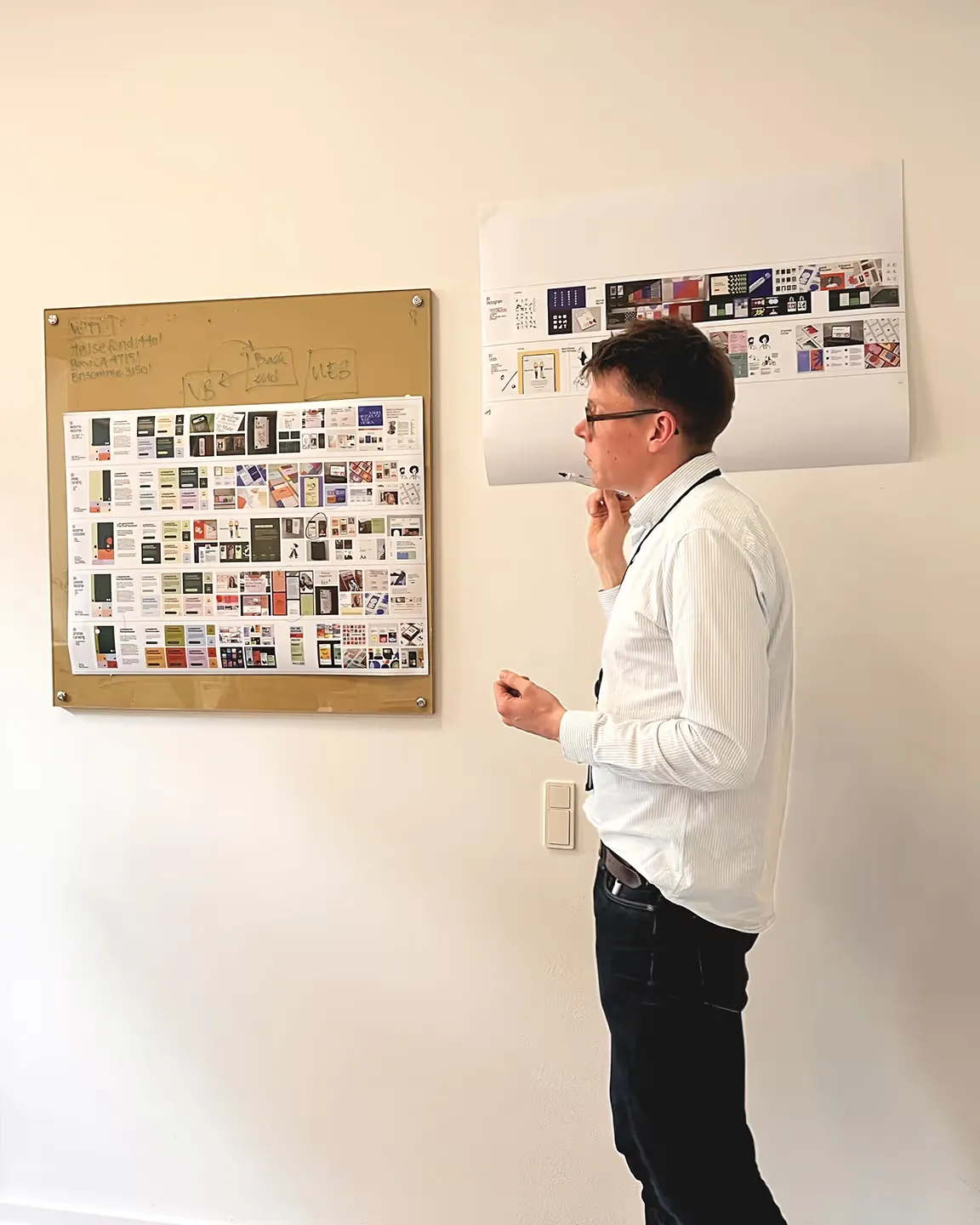
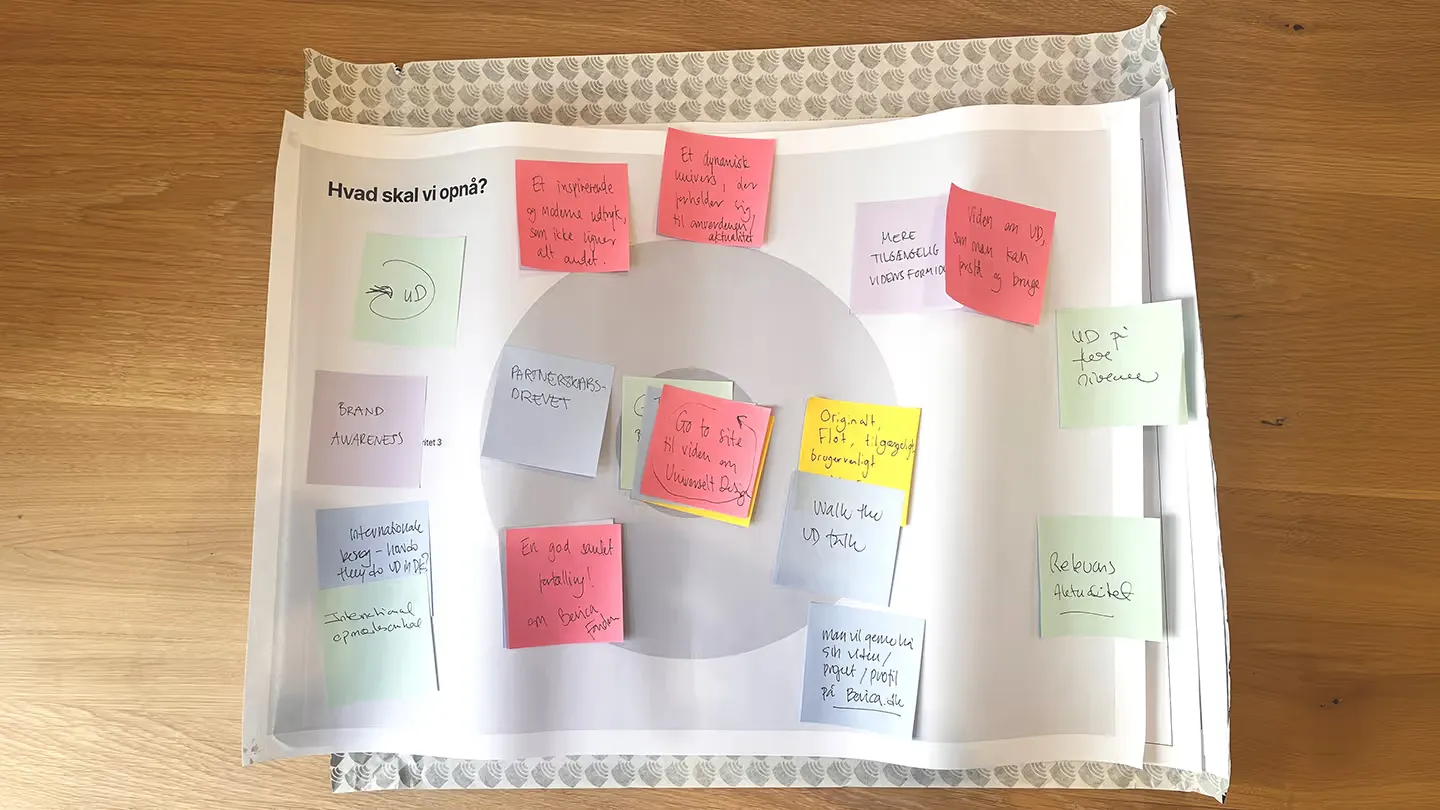
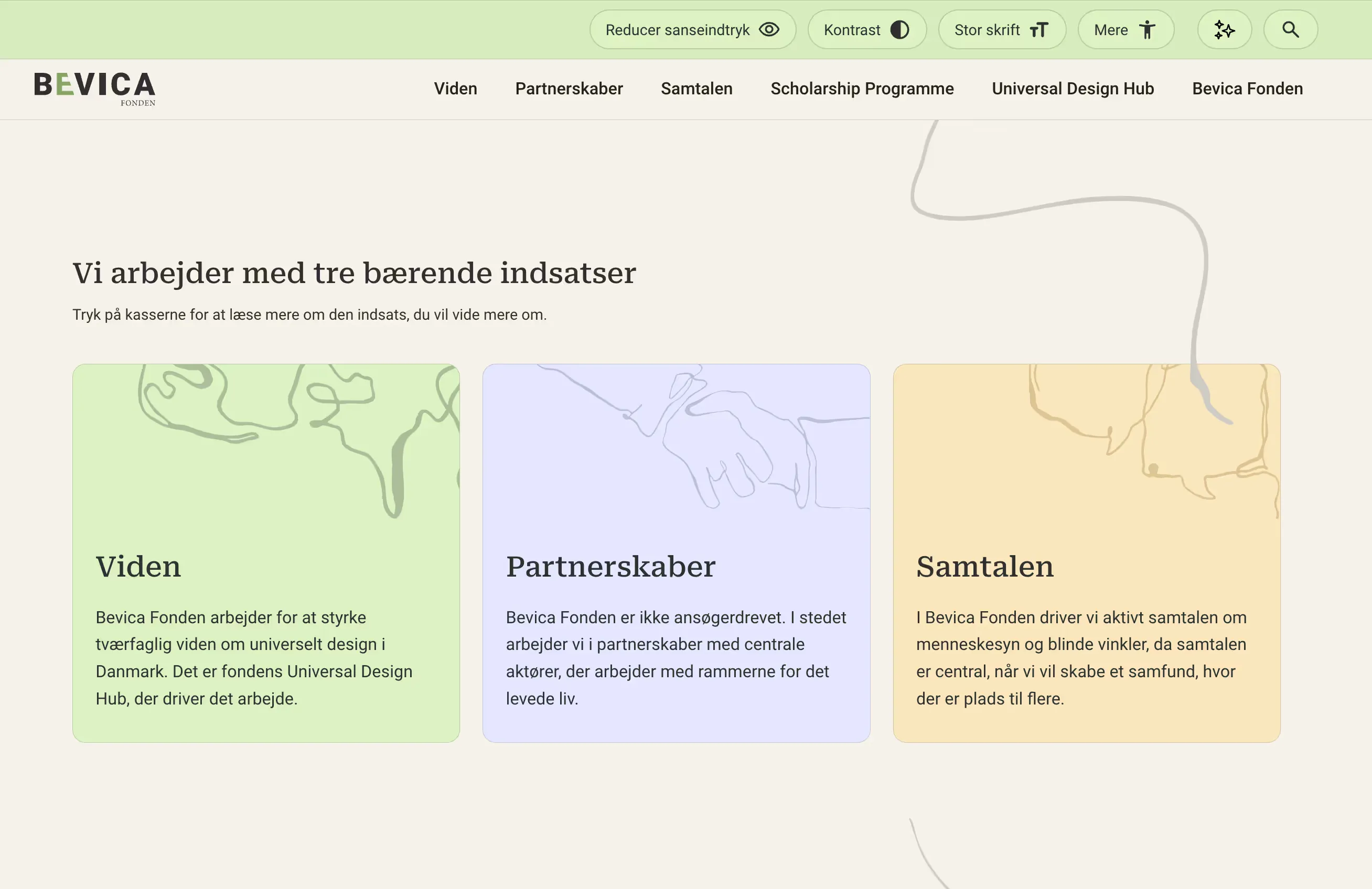
We kicked off with workshops to align on goals, audiences and three strategic pillars: Knowledge, Partnerships and Dialogue. From there we designed a new information architecture that merged the three legacy sites into one, and evolved the visual identity into something more vibrant with a human touch.
Midway through development we added an AI assistant: a custom RAG-based chatbot trained on Bevica’s universal design resources, prototyped with the team and connected directly to the CMS. It answers questions, finds articles, reports and experts, and guides students and practitioners.
More than 500 pages were migrated with redirects to preserve SEO, rebuilt in a flexible Webflow CMS. We closed with user testing alongside representatives from Bevica’s target groups, covering navigation, accessibility and content clarity.
Outcome
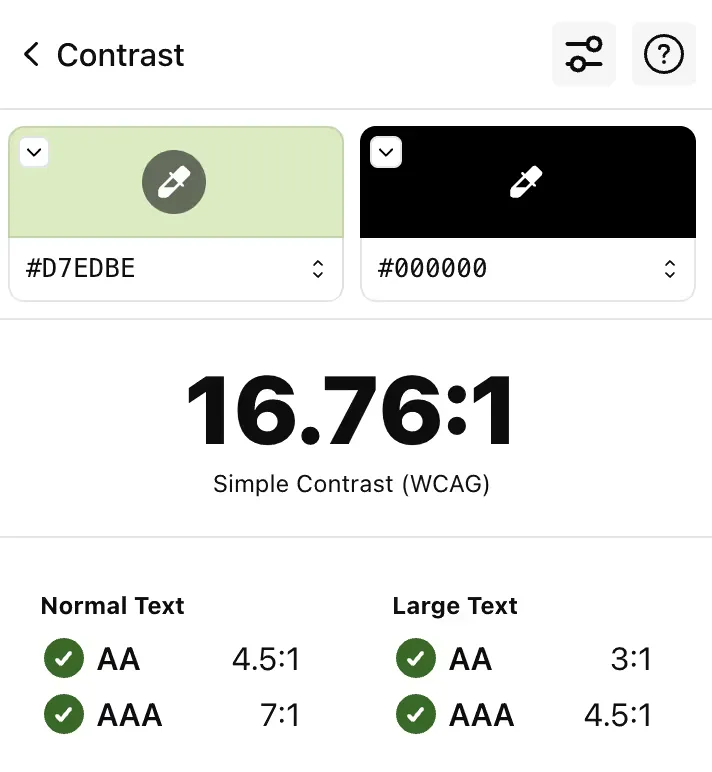
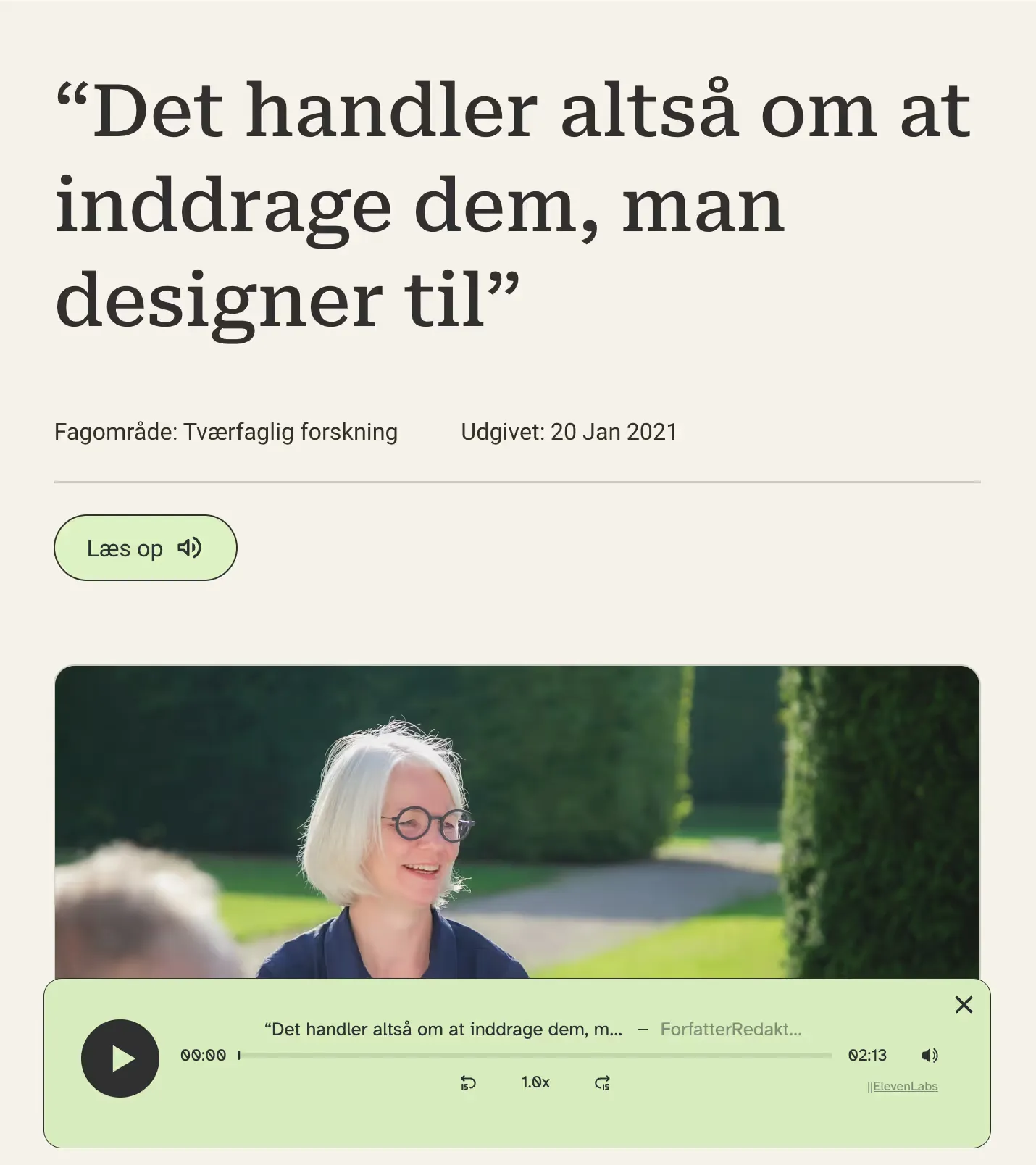
One portal organised around the three pillars, combining knowledge resources, topic packages, expert lists and events. Accessibility is built in: a toolbar for contrast, text size and reduced sensory impressions, natural-sounding article read-aloud, keyboard navigation and skip links, semantic HTML and ARIA roles. The platform meets WCAG 2.2 AA.