Work / Desenma · Own product
A marketplace andencyclopedia for Danishdesign, built solo
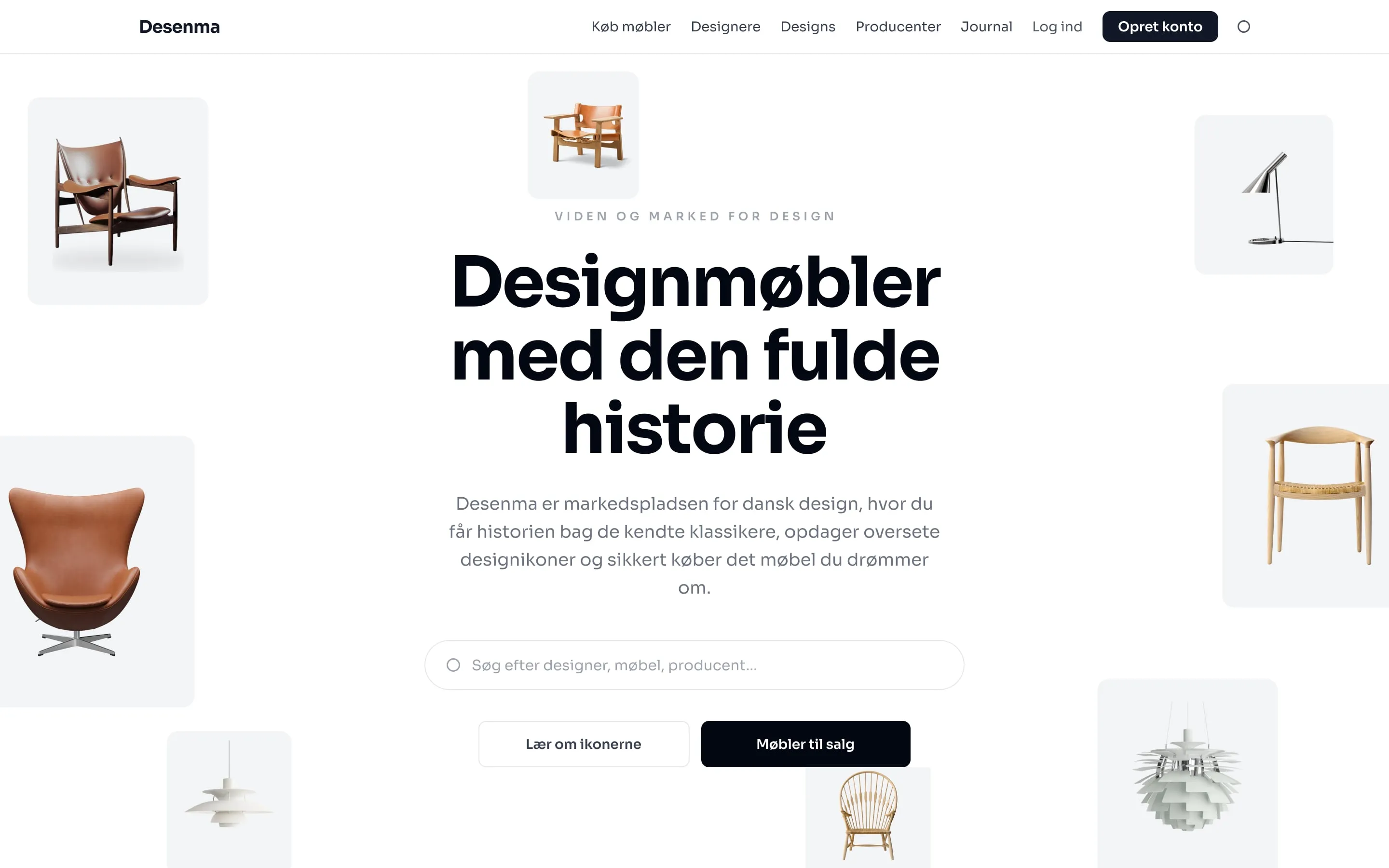
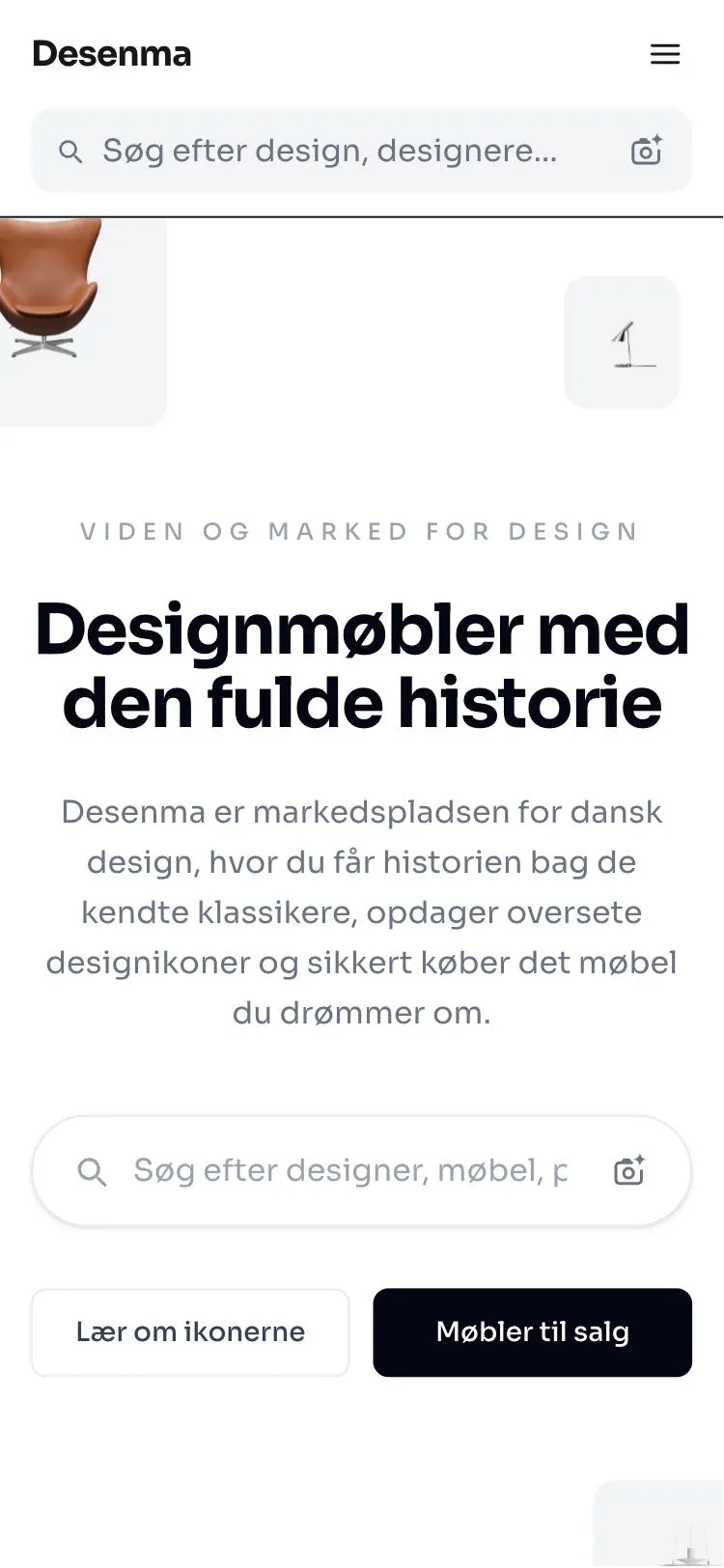
My own consumer product, from first idea to production code. One place to learn the story behind Danish design classics and buy them with confidence.
- My role
- Idea, Strategy, Design, Engineering
- Team
- Just me, with Claude Code as the second pair of hands
- Year
- 2026 · Private beta
- Outcome
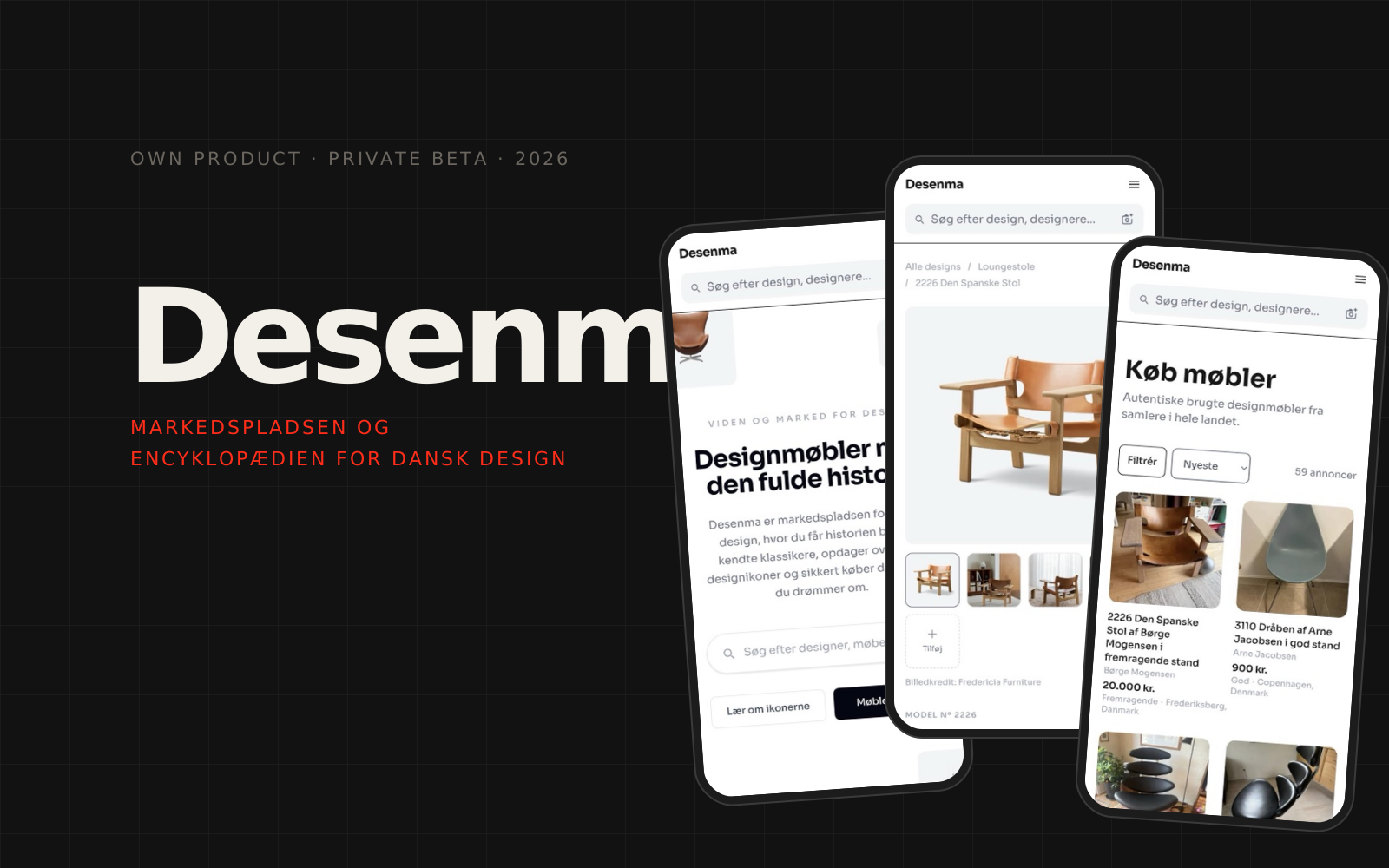
- Live in private beta with 106 catalogued designs and 59 listings
- Deliverables
- Product strategy and pitch · Encyclopedia content model · Marketplace with payments and messaging · AI photo recognition and image search · AI-assisted encyclopedia pipeline · Design system and UI · Infrastructure and release process
-
106
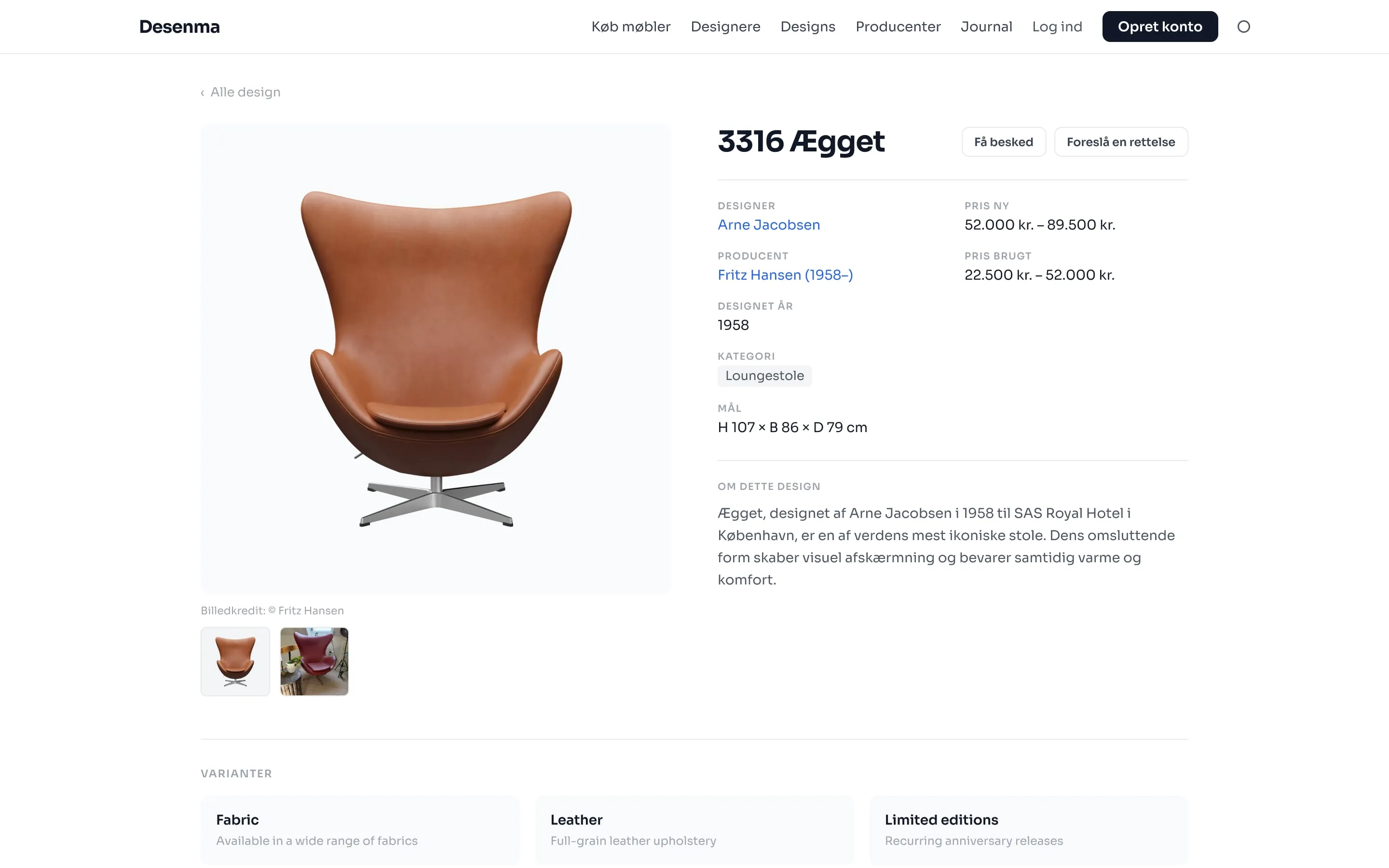
iconic designs catalogued, each with history, buying guide and sources
-
42 + 74
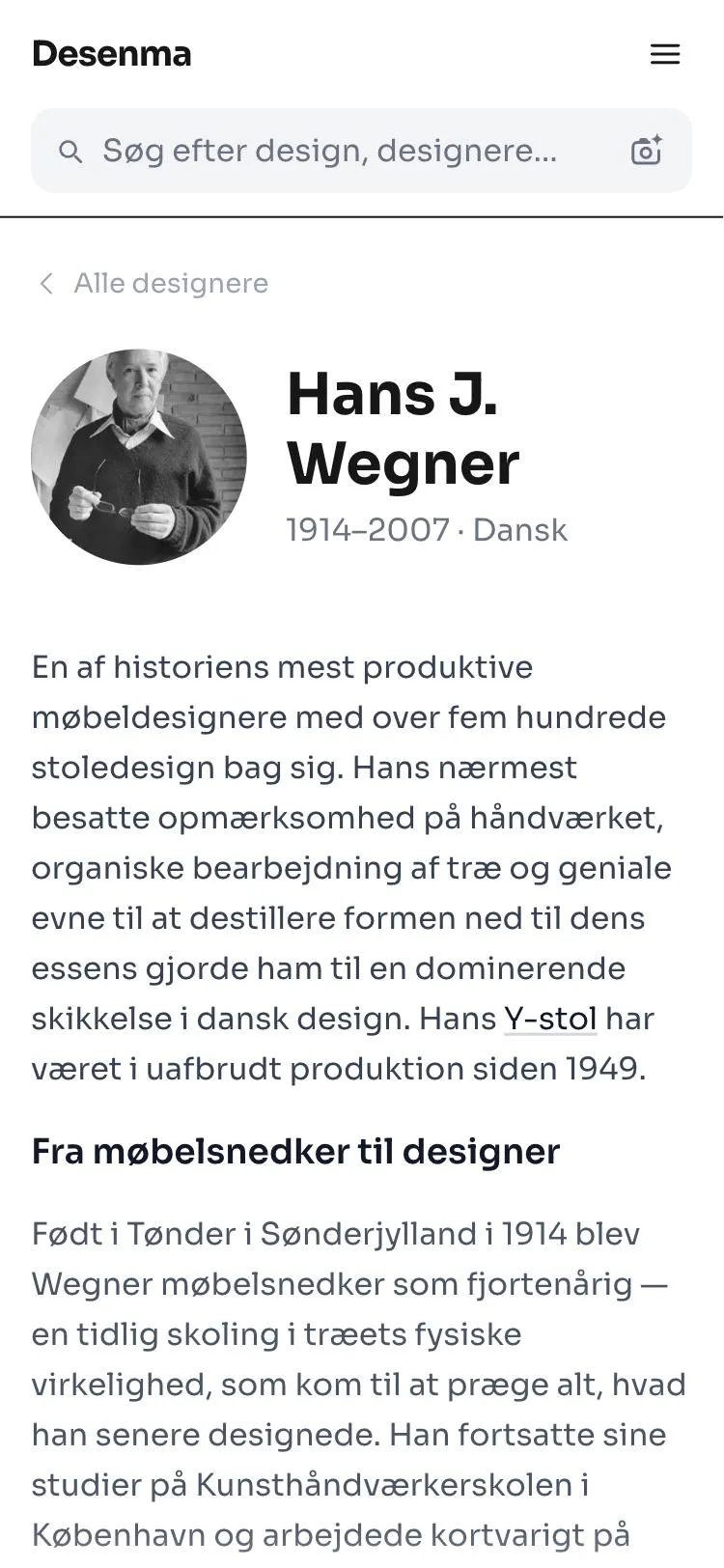
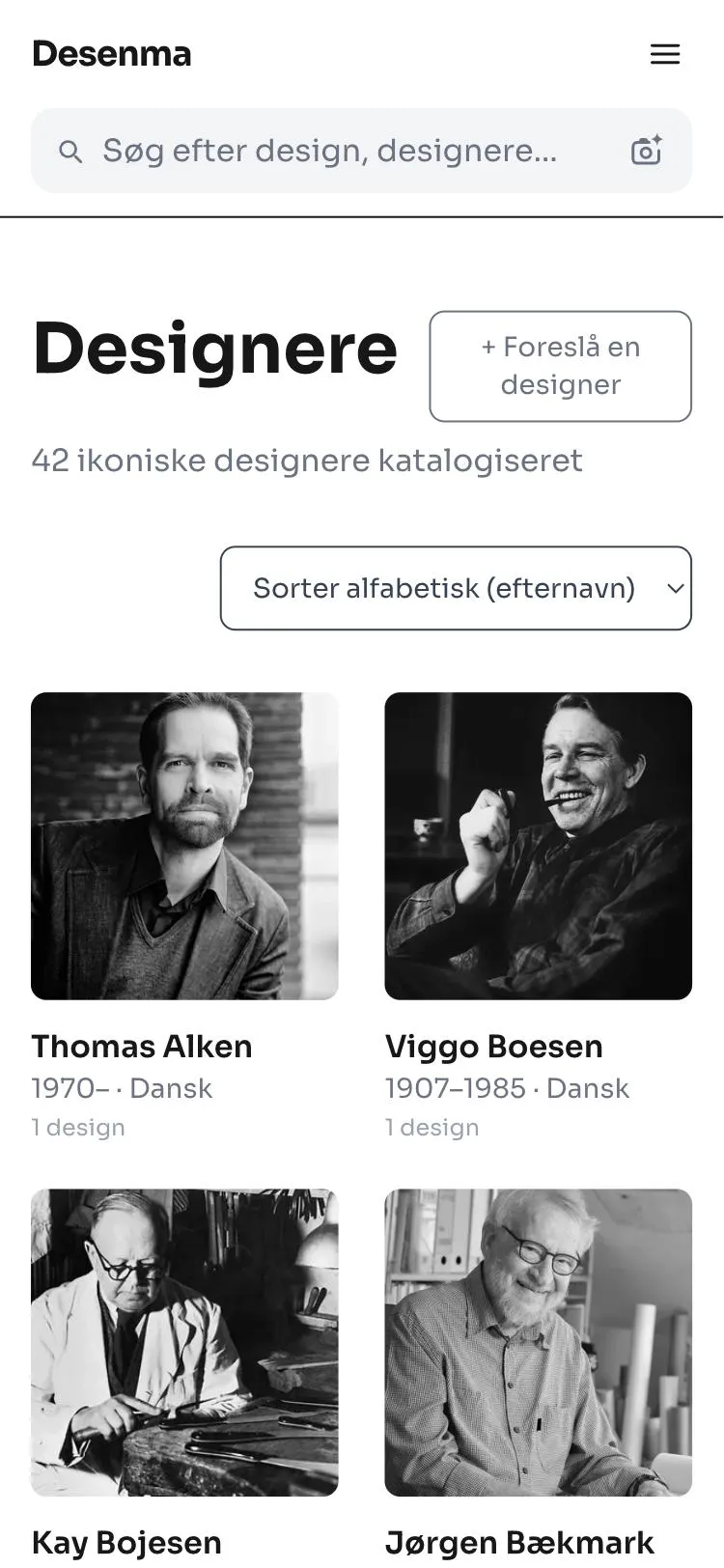
designers and manufacturers in the encyclopedia
-
59
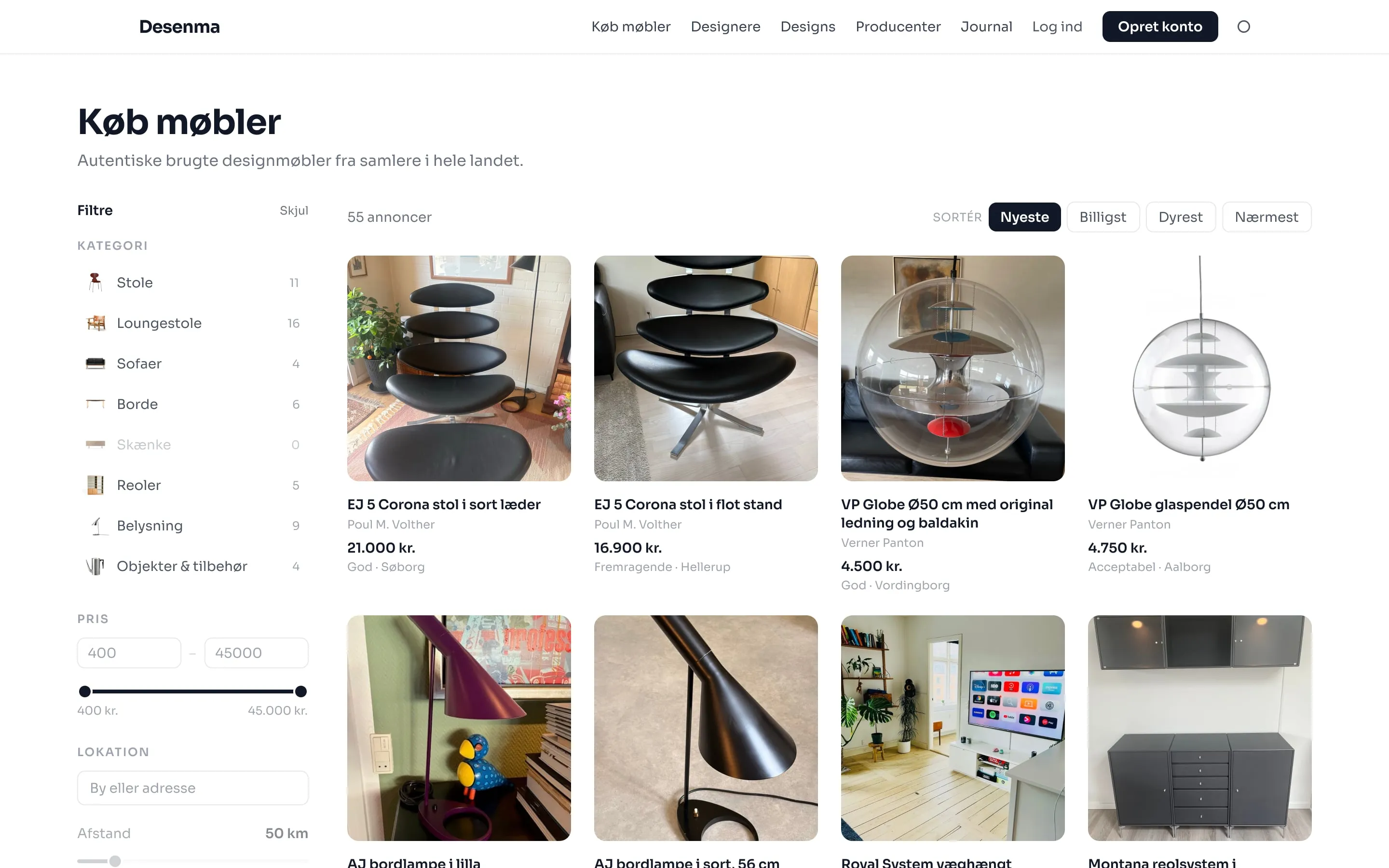
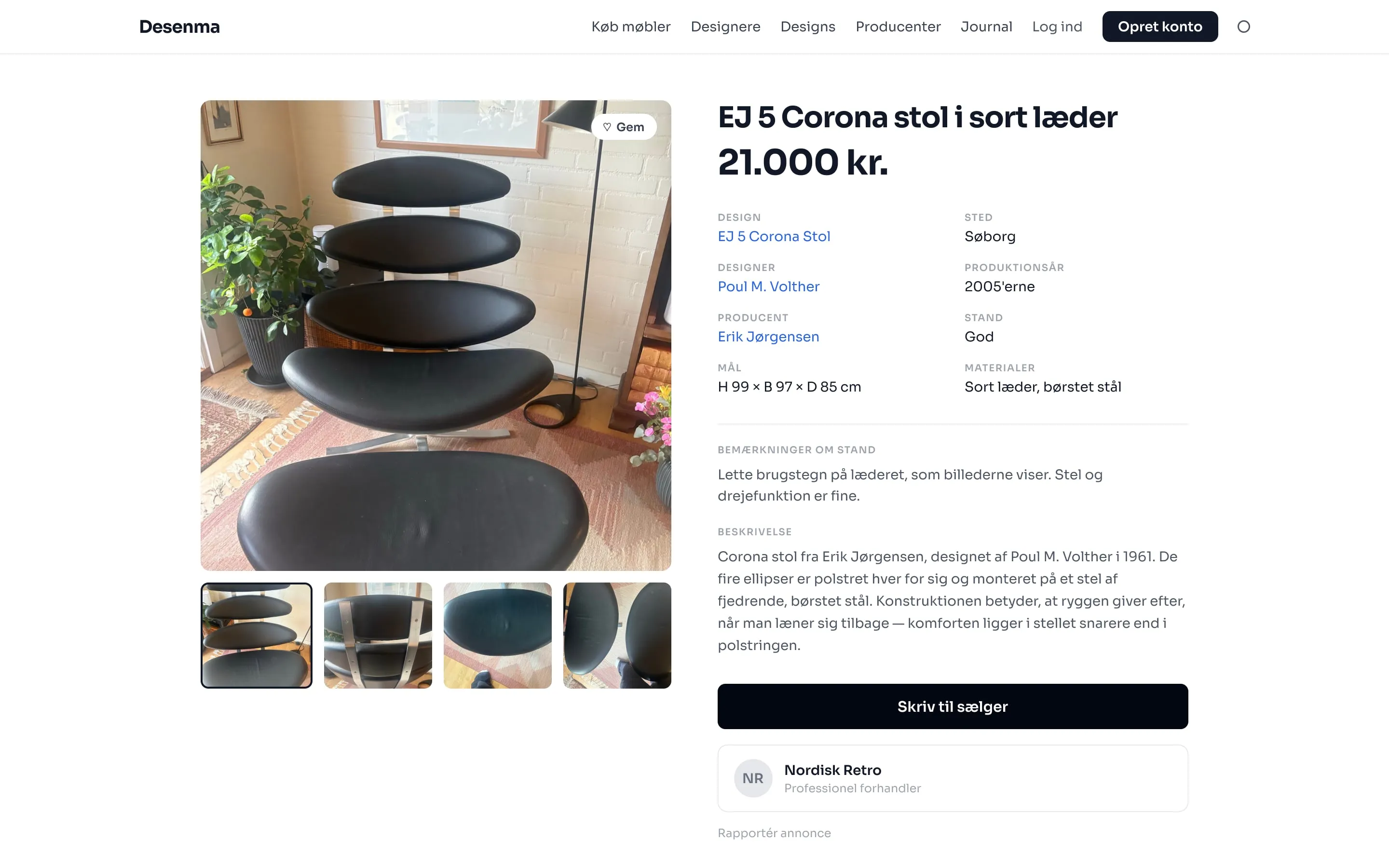
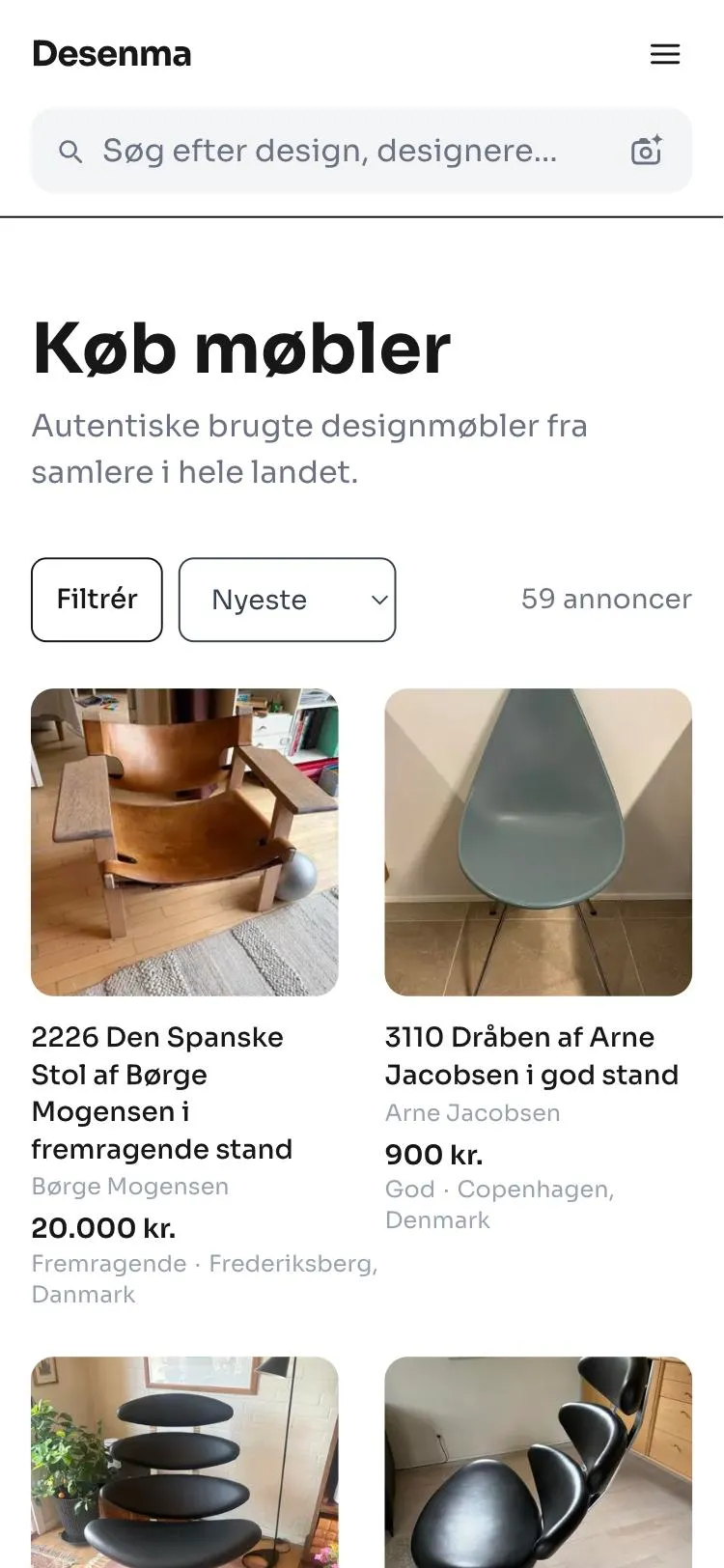
live listings from private sellers and dealers
-
1 person
idea, strategy, design and code, from March 2026
Challenge
Buying second-hand designer furniture is broken. Supply is scattered across classifieds, Facebook groups, dealers and auction houses. Buyers cannot tell a real Wegner from a reproduction, and the knowledge that would help them sits in books and archives. The European second-hand furniture market is worth around EUR 48 billion and Denmark has the densest supply of mid-century design in the world, yet no tech-enabled marketplace owns the space.
I had run a two-sided marketplace before as CEO of Dojo, and closed it when the numbers said to. This time I wanted to build one from scratch, alone, and find out how far one person with AI-native tooling can take a real product.
Approach
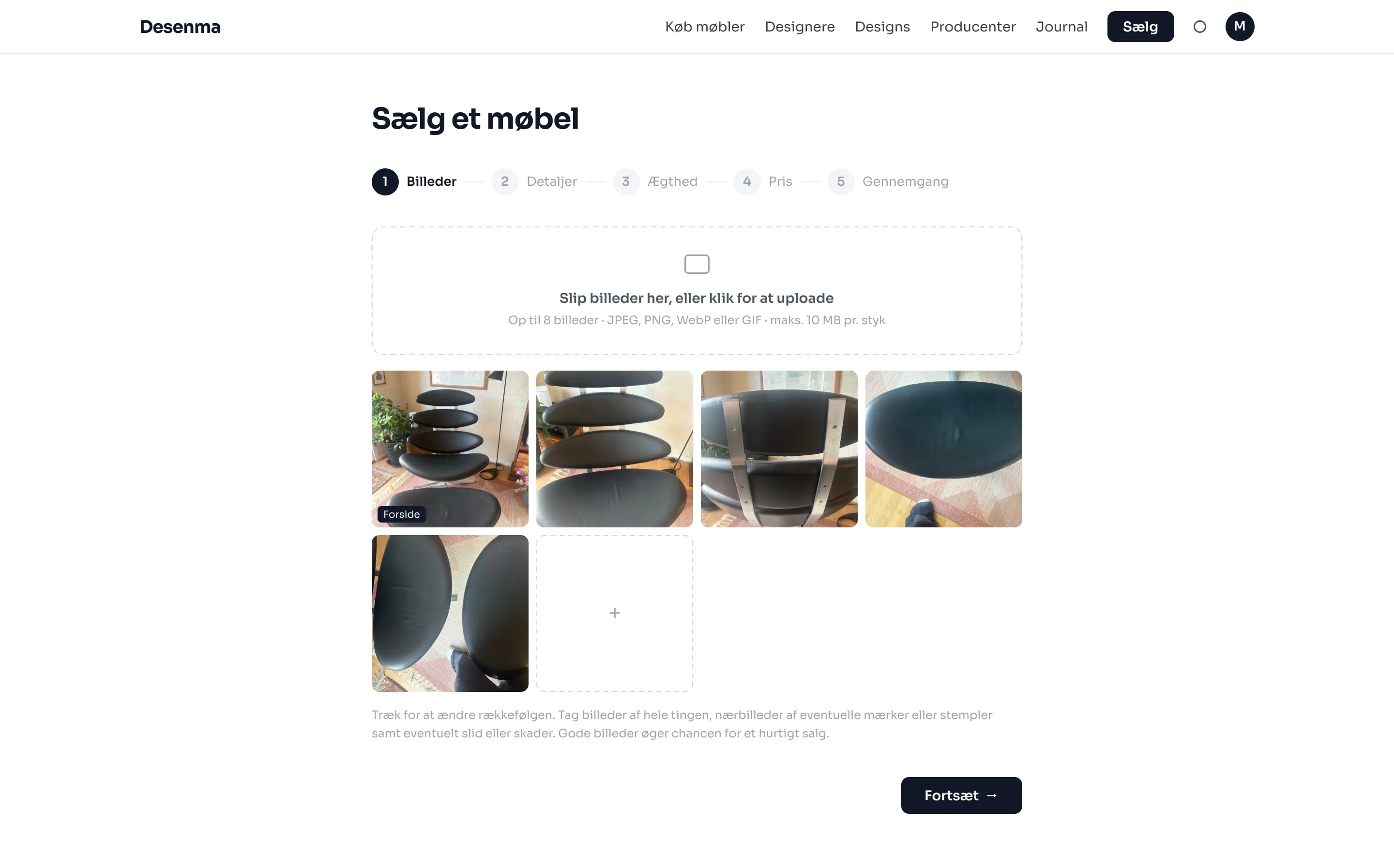
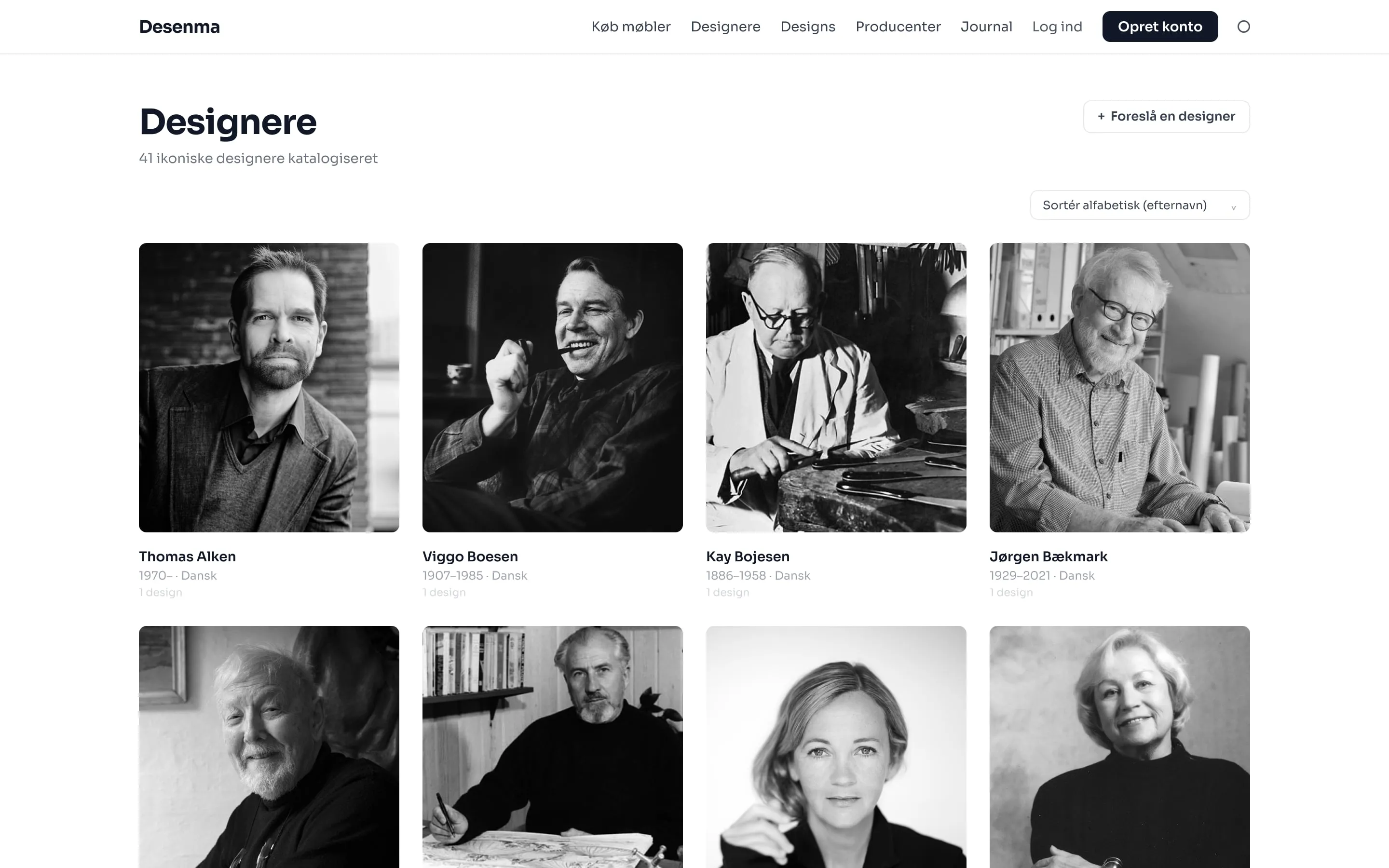
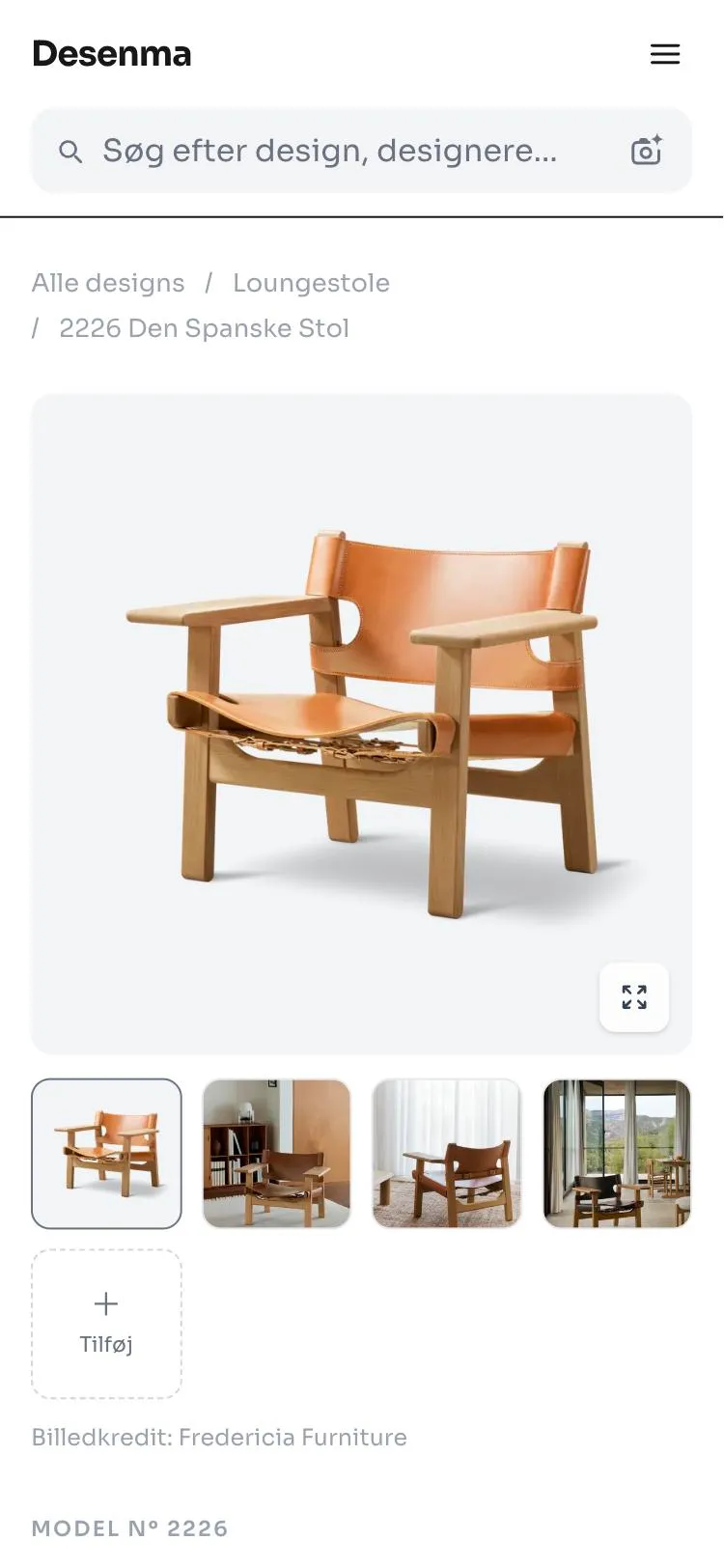
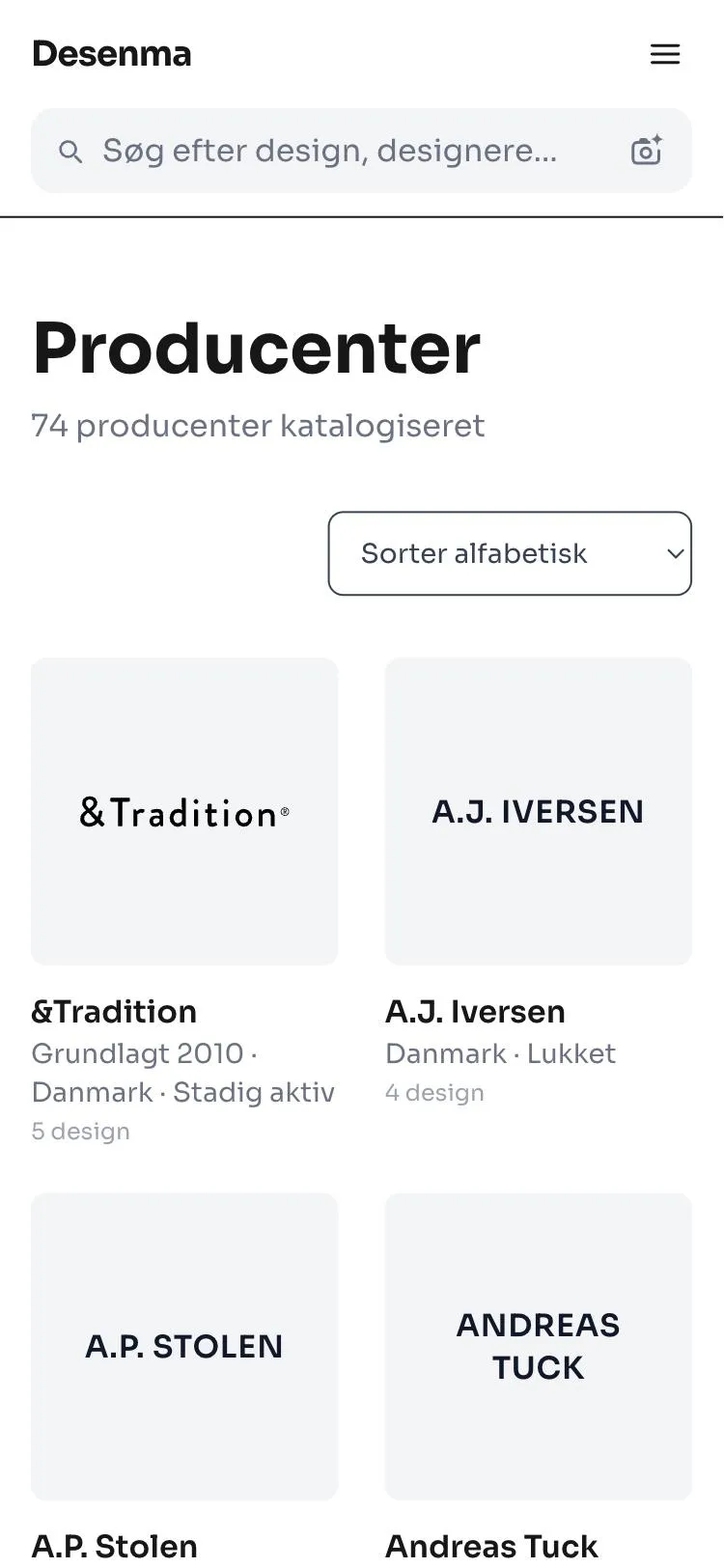
Desenma is two things in one. An encyclopedia where every Danish designer, manufacturer and iconic piece gets a proper entry: history, production timeline, typical used price, a buying guide and cited sources. And a marketplace that sits on top of that knowledge, so every listing is linked to who designed it, when, and in which production.
The encyclopedia is the moat. It drives organic discovery, it makes listings trustworthy, and it lets sellers identify their piece instead of filling in forms. Enthusiasts come for the knowledge and stay to buy and sell.
AI is in the product, not just in the process. Claude’s vision reads a seller’s photos and proposes the matching design from the catalogue, and the same recognition powers an image search that takes a visitor straight to the right entry. Encyclopedia entries are researched and drafted with Claude from a house writing guide and reviewed by me before they go live. Background removal normalises product imagery.
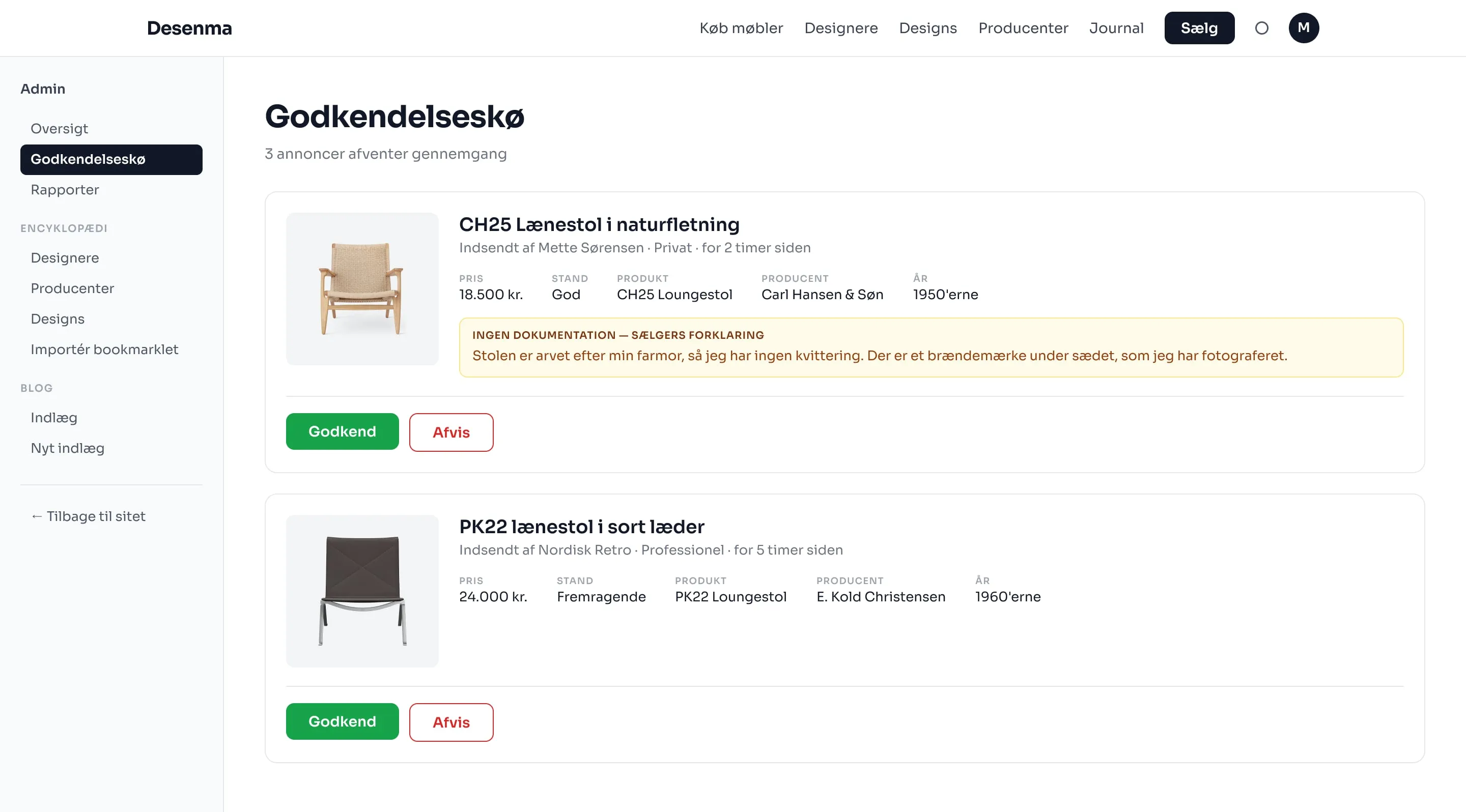
I built the whole thing with Claude Code as my pair: Next.js and TypeScript, Supabase for Postgres, auth and storage, Prisma with 26 data models, Stripe for payments, buyer-to-seller messaging, listing alerts, an admin queue for suggestions and reports, and a staging-to-production release flow on Vercel. First commit in March 2026, private beta by October.
Outcome
Desenma is live behind a soft-launch password with 106 designs, 42 designers, 74 manufacturers and 59 listings, and is being tested with real sellers and buyers before the public launch. Alongside the product I wrote the strategy, the pitch and a grant application to Innovation Fund Denmark’s Innofounder programme.
The deeper outcome is proof of a way of working. Discovery, design, engineering and go-to-market used to need a team. With AI-native tooling, one experienced product person can carry a consumer product from idea to production, and spend the saved time on the part that still matters most: understanding the user.